 Columbia University

NEWS
Prof. Ramnath Publishes Essay in Cambridge History of International Law
 Prof. Ramnath Publishes Essay in Cambridge History of International Law
Kalyani Ramnath, Assistant Professor in the field of modern south Asian history, recently published a new essay titled “The Legacies of Indenture for International Law in Asia” in the Cambridge History of International Law, Vol 2. Her chapter focuses on indentured labor from India in the nineteenth and early twentieth century, and shows how indenture shifted definitions of emigrants and foreigners, shaped discourses on welfare in migration, and left its mark on international relations as they emerged in the aftermath of the two world wars.
Sailakshmi Ramgopal Columbia Global Scholar-in-Residence
 Prof. Ramgopal Announced as Columbia Global Scholar-in-Residence
Sailakshmi Ramgopal, Assistant Professor of Roman History, has been announced as one of 11 of Columbia Global’s 2026 Scholars-in-Residence, joining the program’s second cohort of exceptional Columbia faculty and researchers who will spend up to two months at the university’s Global Centers to advance their teaching and research while immersing themselves in local academics and culture around the globe. The subject of her research will be “Romans Abroad: Citizenship, Place, and Empire” and she will be hosted at the Global Center in Athens.
Kim Phillips-Fein NY Times Op-Ed
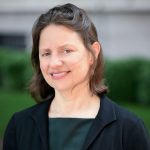
Prof. Phillips-Fein Publishes NY Times Op-Ed
Kim Phillips-Fein, Robert Gardiner-Kenneth T. Jackson Professor of History, recently published an op-ed in the Times connected to her upcoming book titled Country of Lords: Neo-Aristocrats, Social Darwinists, Tech Utopians, and the Long Fight Against Equality in America, which is set for release later this summer.
Pamela Smith Awarded Getty Foundation Grant
 Pamela Smith Awarded Getty Foundation Grant
Seth Low Professor History and Founding Director of the Center for Science and Society Pamela Smith has been awarded a three-year Getty Foundation Grant, with funds supporting research for the project “Minescapes: The Material Complex of Copper in Central Europe and Beyond.” The research will focus on the most important copper mines in the early modern world, which supplied Renaissance Europe with copper for bronze cannons and sculptures, and will bring together a team of historians, natural scientists, and art conservators.
Rebecca Kobrin New Book Recognition
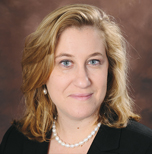 Prof. Kobrin Receives Recognition for New Book
In addition to her recent Presidential Award for Outstanding Teaching, Rebecca Kobrin, Russell and Bettina Knapp Associate Professor of American Jewish History, has received multiple forms of recognition for her new book Credit to the Nation: Eastern European Jewish Immigrant Bankers and the Shaping of American Finance, 1873–1930. The book was reviewed by the Wall Street Journal; Prof. Kobrin spoke about the book at the Center for Jewish History on May 5; and Prof. Kobrin will be discussing the book on a July 6 podcast run by the Hagley Museum.
Amy Chazkel & Yana Skorobogatov Contribute to New Radical History Review Issue
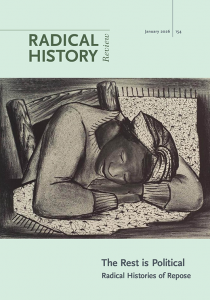
Radical History Review recently released its new thematic issue titled “The Rest Is Political: Radical Histories of Repose” (Issue 154). Amy Chazkel, Bernard Hirschhorn Associate Professor of Urban Studies, contributed as a co-editor and Yana Skorobogatov, Harriman Assistant Professor of Russian and Soviet History, contributed an essay.
Professor Natasha Lightfoot Leads Curation of Exhibit at New Government House Museum of Antigua & Barbuda
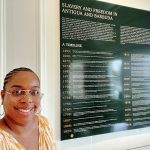 04/17 – Prof. Lightfoot Leads Exhibit Curation at New Government House Museum of Antigua & Barbuda
Last Friday, the new Government House Museum of Antigua & Barbuda celebrated its official opening, cementing its status as a National Heritage Site and concluding a restoration project that began over a decade ago. The museum is dedicated to tracing the country’s history from the onset of British rule in 1632, through emancipation in 1834, independence in 1981, and through to the present day, and is housed in the residence of the island’s Governor General Sir Rodney Williams. Professor Natasha Lightfoot served on the Heritage Panel and led the curation of the slavery and freedom section of the museum, selecting images and objects for display and composing narratives to accompany them.
Professor Sailakshmi Ramgopal Harvard Fellowship and Franklin Research Grant
Prof. Sailakshmi Ramgopal Awarded Research Grant & Harvard Fellowship
In addition to being elected as a Fellow at Harvard’s Center for Hellenic Studies for Spring 2027, Professor Ramgopal has received a Franklin Research Grant from the American Philosophical Society for her research on Roman Greece.
Kimberly Phillips-Fein WNYC Panel – Mamdani First 100 Days
04/20 – Prof. Kimberly Phillips-Fein Discusses Mayor Mamdani’s First 100 Days with WNYC Panel
The event, moderated by senior WNYC reporter Brigid Bergin, opened with an hour-long, one-on-one interview with Mayor Zohran Mamdani and was followed by a panel discussion around his first 100 days in office. The panel featured Professor Kimberly Phillips-Fein, Robert Gardiner-Kenneth T. Jackson Professor of History at Columbia University and author of Fear City: New York’s Fiscal Crisis and the Rise of Austerity Politics; Dennis M. Walcott, President and CEO of Queens Public Library and member of Mayor Mamdani’s and Comptroller Mark Levine’s transition committees; and Melissa Mark Viverito, President of Hamilton Campaign Network. The full video, featuring the interview with Mayor Mamdani and the ensuing panel discussion (starting at 1:10:00), can be found here.
Prof. Elisheva Carlebach, Recent interview in Columbia News…
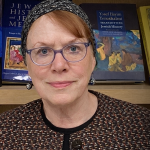 02/09 – Prof. Elisheva Carlebach Explores Women’s Power in Early Modern Jewish Communities – Columbia News.
Columbia historian Elisheva Carlebach explores the vital roles Jewish women played in early modern European communal life in her new book A Woman Is Responsible for Everything, co-authored with Debra Kaplan. Drawing on previously overlooked archival sources, the work highlights how women managed households and professions, led institutions, created texts and objects, and contributed economically and spiritually to their communities—from wealthy patrons to poor laborers. The book offers fresh insights into the kehillah, a thriving form of Jewish communal life from the early modern period. Read the full interview here.